Modern enterprises depend on cloud applications, SaaS platforms, and distributed branch locations. Traditional WAN architectures were designed for backhauling traffic through centralized data centers, creating latency, complexity, and security gaps.
SD-WAN emerged to improve WAN connectivity by using software-based traffic steering across internet and MPLS links. While SD-WAN improves application performance and reduces circuit costs, it still relies heavily on the public internet. This introduces challenges around security, unpredictable performance, operational complexity, and managing multiple overlay networks and security appliances.
The Problem with Traditional SD-WAN
Enterprises using SD-WAN often face:
Unpredictable application performance over the public internet
Complex architectures that require separate security stacks
High operational overhead managing full mesh of tunnels, overlays, and policies
Increased exposure to internet-based threats and attacks
As organizations become more distributed, these limitations make WAN operations increasingly difficult to scale.
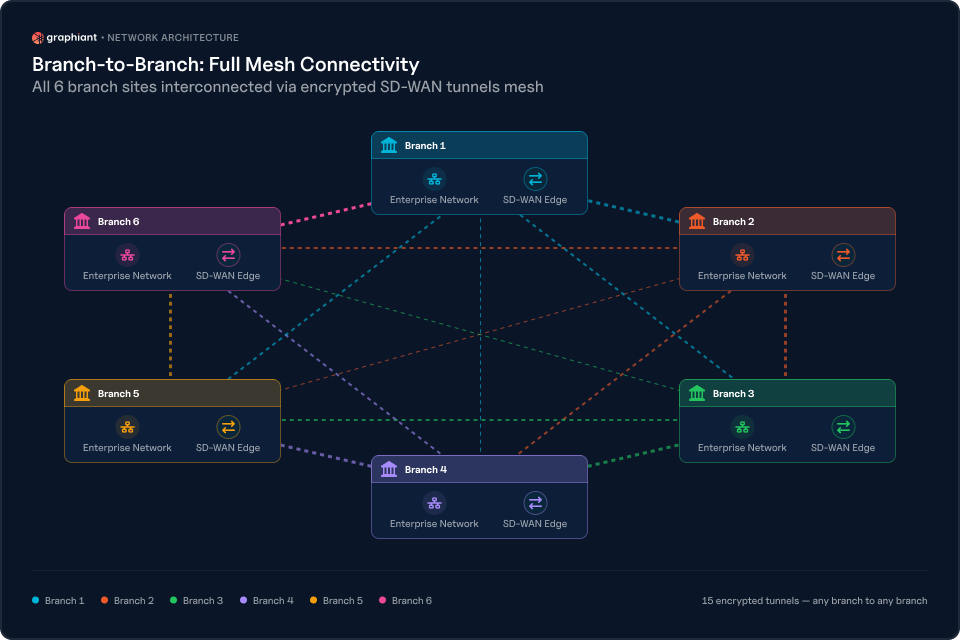
Graphiant Secure WAN
Graphiant Secure WAN delivers a modern alternative to SD-WAN by combining private-network performance with cloud-scale simplicity.
Instead of routing enterprise traffic across the public internet, Graphiant uses a secure, globally distributed private backbone to connect branches, data centers, cloud environments, remote users, and partners. Traffic remains isolated from the public internet while benefiting from optimized routing, integrated security, and simplified operations.
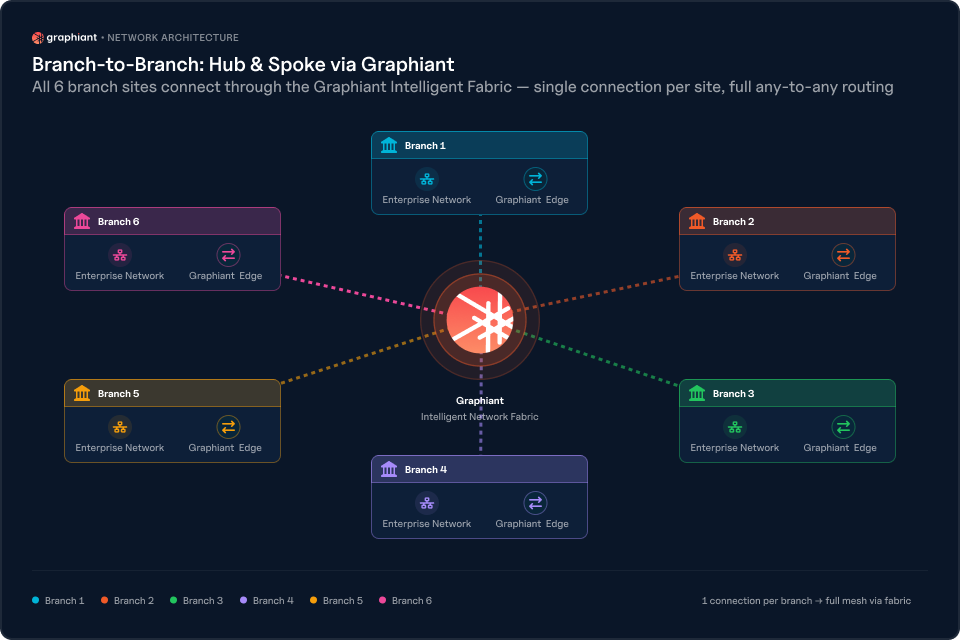
Graphiant Secure WAN vs SD-WAN
Private Network Performance: Avoids the unpredictability of internet-based transport with a secure private backbone.
Integrated Security: Built-in security eliminates the need for complex overlays and additional appliances.
Simplified Operations: Reduces WAN complexity with a cloud-delivered architecture that’s easier to deploy and manage.
Secure Global Connectivity: Seamlessly connects branches, clouds, remote users, and partners without exposing traffic to the public internet.